













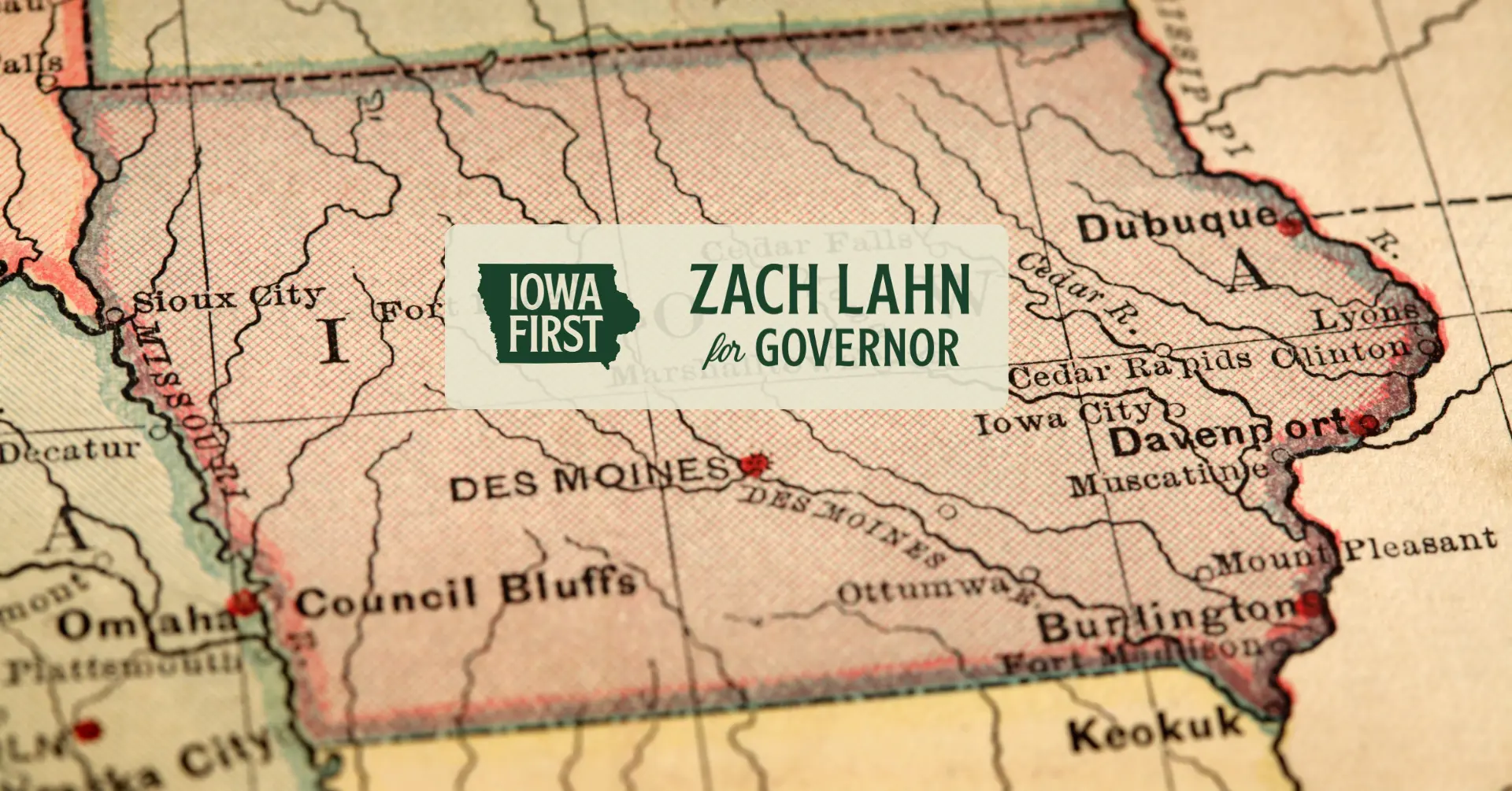
Zach Lahn’s upset victory in Iowa’s Republican gubernatorial primary was more than a protest vote; it reflected a growing belief that outside interests are quietly taking control of the land, the tax base, and the future of agriculture itself. Lahn understood that anger. He criticized the scale and speed of the new Google and QTS facility, describing 1,400 acres of farmland that had been stripped of topsoil and comparing the site to a military installation. He also attacked the massive tax incentives used to lure data center developers into Iowa, arguing that the people bearing the cost of these projects are the ones who benefit least from them. It is not just about diesel prices, national politics, or one election cycle. It is about who gets to decide what happens to Iowa’s land, and whether local communities and the people who live there still have a meaningful say. That is why data centers have become such a potent issue.
The broader constitutional backdrop makes the issue even more politically charged. Under Kelo v. City of New London, governments can justify taking private property for a so-called public purpose, even when the land ends up in private hands. That decision remains one of the most controversial in modern property-rights law because it gave local governments wide latitude to favor economic development over individual ownership. Iowa lawmakers have not ignored that backlash. Recent efforts to narrow “public use” and limit eminent domain for economic development reflect a growing recognition that the law has too often tilted toward powerful interests. That matters because data centers depend on exactly the kind of infrastructure that can trigger land disputes, special tax treatment, and pressure on local officials to prioritize promised revenue over existing farmland. Tech companies usually do not seize land directly through eminent domain. The real power comes through utilities and local governments, which can acquire land for transmission lines, water systems, and other infrastructure needed to support those developments. In practice, that means landowners can find themselves pushed aside not by the company building the data center, but by the network of public and quasi-public entities that make the project possible. Iowa already knows this frustration from years of conflict over wind energy, transmission lines, and the use of farmland for infrastructure that is often sold as progress but felt locally as a loss.
Property taxes and rising land values create a different kind of pressure. As outside investors, developers, and corporate buyers enter the market, farmland becomes more expensive to own, more expensive to pass on, and harder for young farmers to buy into. That turns land from a working asset into a speculative commodity, and for families who see their farms as inheritance, heritage, and livelihood all at once, that shift feels like a direct threat to the future of rural Iowa. Energy costs are part of the same squeeze. When margins are already thin, increases in fuel or input costs can turn into a major burden, explaining why so many rural voters are frustrated with leaders who seem more focused on corporate development rather than the Iowa farmer.
That is why Lahn’s position resonates. He is tapping into a powerful sentiment: that Iowa’s farmers are not anti-growth, but they are tired of being told that sacrifice is the price of progress. The lesson in Lahn’s rise is that rural voters want control over their land, fair treatment under the law, and a government willing to defend the people who feed the state before it opens the door to the next wave of outside development.